
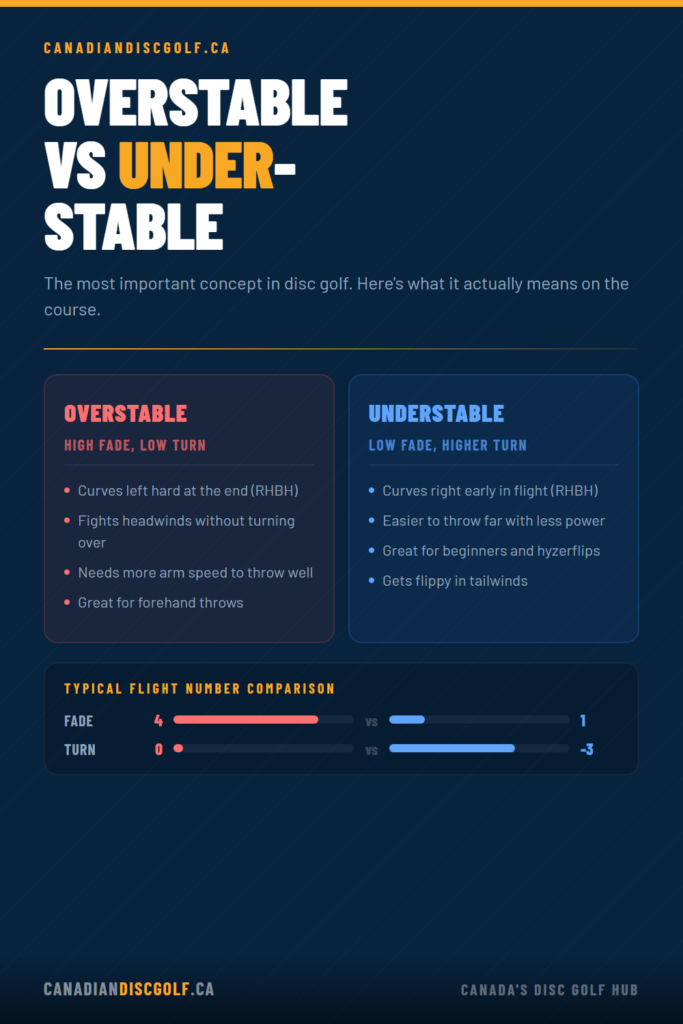
Overstable vs Understable
This right here might be the single biggest “aha” moment in all of disc golf. Overstable versus understable. Once you get it, the whole sport clicks. Before? You’re just throwing and praying.
Overstable discs have high fade and low turn. They fight the wind like stubborn mules. Curve hard left at the end for a right-hander. Need more arm speed to throw properly. Fantastic for forehands or into headwinds. They won’t flip over on you when conditions get ugly. Think reliable finish, predictable as the sunrise.
Understable ones? Opposite story. Low fade, higher turn. They curve right early in flight. Easier to throw far with less power. Perfect for beginners or those hyzer-flip shots that turn into bombs. But watch out in tailwinds, they get flippy quick and can sail way offline.
Typical numbers tell the tale. Overstable might read fade four and turn zero. Understable could be fade one and turn minus three. Night and day.
I’ll never forget the first time someone explained this to me on the course. I was slicing everything right with my new driver. “It’s understable for your arm speed,” he said. Changed everything. Suddenly I understood why certain discs felt impossible while others flew like magic.
You know what’s wild? The same disc can behave differently for different people. What’s overstable for me might be neutral for a touring pro with cannon arms. That’s why flight numbers are just a starting point. You’ve still gotta throw them yourself to really know.
It seems almost like cheating once you learn to match stability to the shot. Need a laser straight approach? Grab something neutral. Want that big sweeping S-curve? Understable with a little hyzer. Fighting a stiff breeze? Overstable all the way.
Honestly, this concept separates casual throwers from actual disc golfers. It’s not about strength. It’s about understanding what the plastic wants to do and working with it instead of against it. Next time you’re at the course, grab one of each type and feel the difference. You’ll thank me later.